All Stories

A Milestone Celebration for IHSS Caregivers

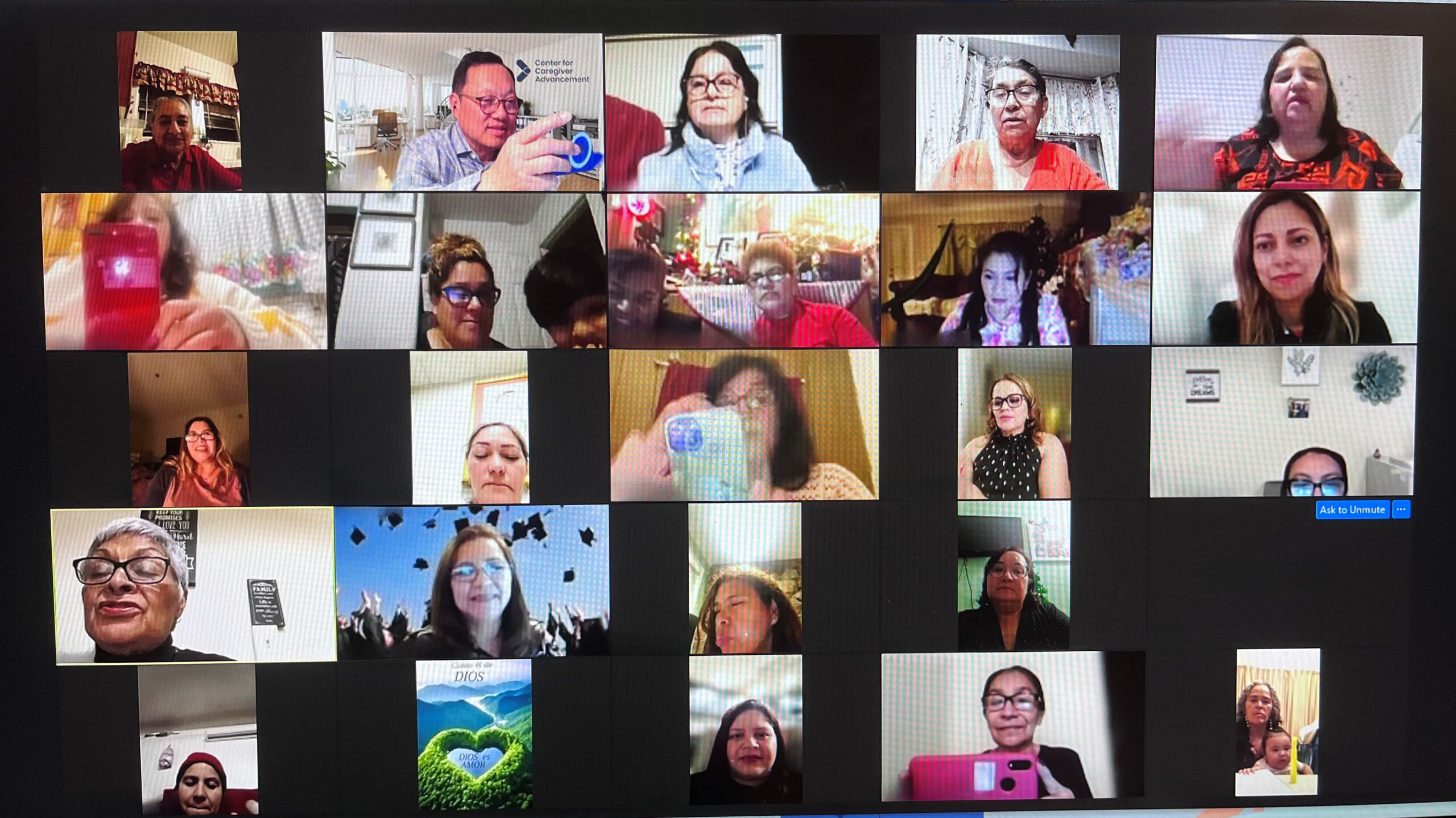
The IHSS caregiver training courses at CCA are not complete without a virtual graduation ceremony. Each trimester culminates in this special celebration that, for some, will be their first-ever graduation ceremony.

It’s an occasion for IHSS caregivers to take center stage, to have their moment to shine and acknowledge their hard work and successes. Participants have the chance to speak about their experiences in the course. They can discuss the impact of the skills acquired in the program with their fellow graduates. 

Tondaris Southward, an IHSS Provider shared her experience at her graduation.

“I learned how to be more aware of client needs,” said Tondaris. She mentioned that the lessons related to body mechanics, in particular, were the most beneficial for her. She was able to implement what she learned in the course right away in her role as a caregiver. 

IHSS Bilingual Mandarin Class Graduation photo with Sherry Wu

The CEO of L.A. Care Health Plan, John Baackes, attended one of the graduation ceremonies held this December. 

“This program is very important to your clients but also to you as the caregivers,” he told the class. “It gives you a leg up in your professionalism and your self-confidence. And if you have more confidence, your consumer will be confident in you!” 

“Whatever you learned here will help your client immensely,” he said. “I am convinced that during the pandemic, this program saved lives.”  

L.A. Care has partnered with CCA to provide free training to the IHSS providers who care for L.A. Care Health Plan members. Since the partnership began seven years ago, nearly 6,000 IHSS providers have completed the training under this program.

In addition to student success, another benefit to this partnership is caregiver satisfaction. According to post-training survey responses, 99% of the students believe that participating in the training was helpful to them in their roles as caregivers. 

IHSS Bilingual Spanish Graduation photo with Samuel Kwon

Resources beyond the classroom

Many graduates shared that the training equipped them with richer knowledge of how to communicate with their consumers. IHSS provider Arlene Alfaro said she learned “to have more communication with the consumer and to build more trust with [them]. Based on the skills you taught us and the things we learned in the book, I built a better relationship with my consumer,” Arlene told her instructors during her graduation. 

As a part of the material taught in class, participants are given additional resources that they may use in their caregiving careers beyond the classroom, such as nurse hotline numbers to call in case they need advice. “I learned about the other services that are available to us,” said Maria Martinez during her graduation speech. 

Additionally, the training provides caregivers a platform to meet others in the caregiving profession and establish connections that last beyond their time in the training. Another caregiver spoke about how she was positively surprised about how much she enjoyed the breakout rooms portion of the coursework because she was able to interact and establish connections with other caregivers. 

Related Reading: Pioneering Research on IHSS Training

Honoring Families Who Care for Those with Alzheimer’s

Alzheimer’s is more than a mere diagnosis for countless families globally; it marks the beginning of a life-altering journey that exacts a toll on their emotional, mental, and physical well-being. The role of a caregiver is demanding, requiring immense patience and empathy. It often involves witnessing a loved one’s cognitive decline, which can be heart-wrenching. 

“There are times … my dad would wake up and knock on my door in the middle of the night and ask me, ‘How is your mom? You have any information about your mom?’ My mom has passed away for many years,” says Qi Zhen Louie, an In-Home Supportive Services (IHSS) provider who has taken CCA’s Alzheimer’s care training.

More than a quarter of the IHSS providers in the program take care of a parent with Alzheimer’s disease and related dementia. Like Qi Zhen, caregivers are often children, or even spouses or close friends, who step into this role out of love and commitment. And, often, they do so without the training necessary to help them adapt to the ever-changing needs of their loved ones.

The Alzheimer’s care training helped Qi Zhen understand the symptoms and stages of the disease. “Now, I am more patient, and it helps with my communication with my dad,” she says. “Before, as soon as he threw a tantrum, I felt very upset …But I learned from (CCA’s) teachers a lot, and also from the sharing of our peers, the students. After the training, I have a lot of positive energy. And I’m able to understand some things that I did not know before.”

(Note to reader: Qi Zhen did this interview with a Cantonese interpreter).

CCA Welcomes New Board Members!

CCA is proud to welcome four new members to our Board of Directors. They represent organizations that champion health equity, social justice, and workforce development. Their expertise in their respective fields, along with their commitment to the well-being of long-term care workers and the individuals they serve, will help guide our work of advancing the caregiving workforce.

Jennifer Schlesinger
Vice President, Healthcare Services & Professional Training, Alzheimer’s Los Angeles

Jennifer Schlesinger, Vice President Alzheimer's Greater Los Angeles

Jennifer Schlesinger is the Vice President of Healthcare Services & Professional Training for Alzheimer’s Los Angeles, a nonprofit organization committed to supporting, educating, and empowering local families as they face the everyday challenges of dementia. Jennifer works on state-level advocacy to improve dementia care within healthcare, especially for lower-income older adults. She oversees technical assistance to healthcare systems to improve their dementia capability, professional training, and outreach to healthcare professionals. She oversees multiple nationally-recognized and award-winning projects, including the Dementia Cal MediConnect Project, a project transforming healthcare in the State of California for low-income older adults with dementia, and ALZ Direct Connect®, a care coordination program, which connects families dealing with dementia to Alzheimer’s Los Angeles.

Jennifer says, “Caregivers are our backbone. They do the most precious work in our families and communities and yet are often unrecognized and underappreciated. CCA is a vehicle to elevate caregivers and hold them up with the dignity and respect that they deserve.”

Jennifer is a founder of The ReelAbilities Film Festival Los Angeles, which is dedicated to promoting awareness and appreciation of the lives, stories, and artistic expressions of people with disabilities.  In her free time, she continues to volunteer as a ReelAbilities steering committee member. 

Carmen Roberts
Executive Vice President, SEIU 2015

Carmen Roberts, Executive Vice President SEIU Local 2015

Carmen Roberts is the first from-the-ranks SEIU 2015 member to be elevated to the position of Executive Vice President of the statewide union representing California’s long-term care workers. A longtime member of the union’s Bargaining Committee for Los Angeles County IHSS providers, Carmen has served on the union’s Executive Board for nearly a decade, and became a Regional Vice President for L.A. County in 2017, and most recently became the union’s very first statewide member leader for home care: First Vice President, Home Care Industry. 

As Executive Vice President, Carmen draws on all her personal experience as a caregiver to this role. Carmen continues her commitment to building power and bringing structural change to the long-term care industry. 

Carmen is looking forward to bringing that dedication to CCA as a board member. “Too many care providers don’t have enough access to the quality, affordable training necessary to provide the best possible care. As a former care provider, I’ll work with CCA to provide increased availability of training. That’s key to ensuring long-term care is recognized as a real career…where young people will say ‘I want to go into long-term care work’ like others choose engineering, medicine, and law,” she says.

Padmini Parthasarathy
Principal and Founder, Sāmya Strategies

Padmini Parthasarathy, Principal & Founder Samya Strategies

Padmini Parthasarathy is a social sector leader with a deep understanding of the interconnectedness of health equity and economic, racial, and gender justice. She is committed to cultivating systems and structures that honor those interconnections. In 2021, Padmini founded Sāmya Strategies to more directly channel her passions and expertise toward these efforts.

“I am looking forward to learning more from CCA and my fellow board members about how to ensure quality jobs for direct care workers in California and working together to make that happen!,” she says.

Padmini has a proven record of success in advancing justice, equity, and well-being across philanthropy, the nonprofit sector, and local government. In addition to leading her consulting firm, she serves as the Bay Area Program Officer for Asset Funders Network. Prior to her current roles, she served as strategist for justice, equity, and learning and senior program officer for economic security at the Walter & Elise Haas Fund and as a program director at The California Wellness Foundation, overseeing statewide grantmaking to advance the Affordable Care Act and health care reform and promote employment and asset-building opportunities. Before that, Padmini was a program manager for Kaiser Permanente, where she managed its first nationwide Community Health Needs Assessment. She also led an initiative to incorporate asset building and social determinants of health approaches into maternal and child health programs for Contra Costa Health Services.

Zima Creason
Executive Director of the California EDGE Coalition

Zima Creason, Executive Director, California Edge Coalition

Zima Creason is the Executive Director of the California EDGE Coalition and President of the San Juan Unified Board of Education. At EDGE, her work seeks to address workforce shortages in high-road industries, create pathways to the middle class, and to advance shared prosperity for all Californians. She is committed to stakeholder empowerment and coalition building to establish and sustain thriving communities. Zima has worked in the policy field since 2001, and much of her work has focused on equity as it relates to mental health policy, as well as community outreach and engagement. She is dedicated to supporting people to avoid crisis outcomes, social justice, and for all Americans to have access and opportunity to achieve the American Dream, regardless of their zip code, culture, ethnicity, socioeconomic status, health/mental health status, gender identification, and/or who they love.

Zima is looking forward to making an impact on the long-term care workforce. “As a CCA board member, I am eager to champion the essential caregiver workforce that all Californians rely on. Their dedication not only improves the lives of those they care for but also uplifts the well-being of countless families, many of whom are part of the workforce. Together, we will enhance the value of caregiving and create pathways to economic advancement for this indispensable workforce,” she says.

These board members join our team of current CCA Board of Directors members Jeffrey Phillip Forrest of the Conrad N. Hilton Foundation, Kim Evon of SEIU 2015, Jim Mangia of St. John’s Well Child and Family Center, and Silvia Yee of the Disability Rights Education and Defense Fund.

Report: Alzheimer’s Care: Specialized ADRD Training Report

In 2019, UCSF was awarded a five-year, $3.2 million California Department of Public Health Alzheimer’s Research Award to study the impact of IHSS+ Alzheimer’s training in partnership with the Center for Caregiver Advancement (CCA) and Alameda Alliance for Health (AAH).

The Center for Caregiver Advancement (CCA) provided an Alzheimer’s Disease and Related Dementias (ADRD) course, which was specialized training for caregivers to help them understand how to care for people with ADRD.

Impact of ADRD Training for Caregivers

The project had a significant positive impact on our graduates. Our students feel more confident to care for their consumers after completing our program. According to the impact study conducted by UC San Francisco researchers:

97% felt that they learned new caregiving skills during the training

94% agreed/strongly agreed that communication with their consumer improved because of this training.

The study also showed that dementia knowledge significantly increased after training. Data from a three-month follow-up survey suggest good knowledge retention. The study concluded that the results “support the importance of continuing and expanding this work with home care workers.”

By consistently incorporating student feedback, providing administrative assistance, and offering makeup classes, we create an environment where our students feel supported, empowered, and valued. These services not only contribute to the success of our students but also enhance the overall impact and effectiveness of our training programs.

These findings were published in the Journal of Gerontology.

Read our Year 4 Report:

Report: Elevating Care: L.A. Care Health Plan

The L.A. Care Health Plan partners with the Center for Caregiver Advancement and the SEIU 2015 union to train caregivers. The In-Home Supportive Services (IHSS) providers who care for L.A. Care Health Plan members can sign up for free training at CCA. The L.A. Care IHSS+ Home Integration training program teaches caregivers essential caregiving skills.

L.A. Care Health Plan Training Program for Caregivers

The IHSS+ training offer a weekly online class that runs for 10 weeks. Home caregivers learn essentials skills like proper body mechanics to avoid injury when moving a care recipient, proper nutrition, personal hygiene, home safety, infection control, mandated reporting and documentation, medication safety, and more.

Since CCA started its partnership with L.A. Care, CCA has trained nearly 6,000 IHSS providers caring for L.A. Care members.

Read our annual report:

Report: Impact of Climate Resiliency Caregiver Training

CCA is proud to share the outcomes of our Caregiver Resiliency Teams training program pilot, which we developed through a California Workforce Development Board (CWDB) High Road Training Partnership (HRTP). In just 13 months, we successfully trained over 500 long-term care workers in foundational knowledge on climate change and essential emergency planning and response techniques. 

As you can see in this Report, the In-Home Supportive Services (IHSS) providers and nursing home workers who completed the six-week comprehensive course showed substantial gains in skills and knowledge. These caregivers now possess the critical climate-resiliency skills needed to act swiftly and effectively during times of crisis, ensuring that our seniors and people with access and functional needs receive the assistance they need, when they need it most.

We also hosted an Impact Study Briefing to accompany this Report. During the presentation and subsequent panel discussion, we underscored the importance of investing in caregiver workforce training, which plays a pivotal role in building a climate-resilient California.

Our primary goal for the webinar and the Impact Report was to demonstrate, based on the outcomes of our Caregiver Resiliency Teams project, that investing in permanent, compensated training programs aimed at equipping caregivers with emergency preparedness skills can serve as a critical component of California’s response to climate change.

Note: The Caregiver Resiliency Teams pilot program was later renamed Emergency and Disaster Readiness (EDR).

Related Reading:
CCA Emergency and Disaster Readiness Course Highlighted in the News

CCA Training May Reduce ER Visits, Healthcare Costs

Report: L.A. Care Training in Trimester 17

In addition to the annual impact report that the Center for Caregiver Advancement (CCA) prepares for the L.A. Care Health Plan, we provide an interim report after each training trimester.

CCA has been partnering with L.A. Care for several years to provide training to In-Home Supportive Services (IHSS) providers that assist L.A. Care members with in-home care.

CCA regularly evaluates the value and impact of its training programs on the caregiver workforce and the quality of care they provide through impact studies. Many of these studies are conducted in partnership with academic institutions and research organizations. Once an impact study is complete, the Research and Policy team at CCA helps our program directors compile the data into impact reports.

The Learning and Instruction team at CCA designs curricula and programs based on the data resulting from these studies. They use the results from impact studies, qualitative research, and subject matter expert opinion, to guide and improve the training.

The findings from our research help to move the evidence base into actionable strategies and policies that help advance workforce development for long-term care workers.

The “IHSS+ Home Care Integration Training Interim Report, March 2023” is the result of an impact study.

Please access the report via the button below.

Report: IHSS+ Training Decreases Consumer ER Visits and Inpatient Utilization

When Felipe Murillo suddenly became his mother’s full-time caregiver, everything seemed like an emergency and they made a lot of ER visits.

“Initially, after my mom came out of the hospital, I would get scared about everything that would come after that, like when she started coughing,” he said. Felipe’s initial reaction anytime his mother was experiencing anything out of the ordinary was to take her to the emergency room (ER).

Caregiver Training Improves Quality of Care

However, after completing CCA’s 10-week IHSS+ caregiver training program, Felipe can now distinguish between a situation that requires an ER visit and those that can be handled via an urgent care facility. Through this training I am “… learning about the differences. [I learned that] maybe she doesn’t really need to go to the ER every time, maybe I could just take her to urgent care,” he said.

L.A. Care Health Plan Supports Training for IHSS Providers, Home Caregivers

A new report from L.A. Care Health Plan shows that CCA’s IHSS+ training program reduces consumer emergency room visits and inpatient utilization. L.A. Care is CCA’s partner in delivering quality, evidence-based training to hundreds of IHSS providers whose consumers are L.A. Care members.

The utilization study, entitled Evaluation of In-Home Support Services (IHSS) Training on Health Care Outcomes and authored by Matthew Pirritano, PhD, states that among the consumers whose caregivers participated in the training, “there was a statistically significant decrease in ER utilization over time.”

Research Shows That Caregivers Retain Their News Skills Long After Training

This trend was reported as decreasing prior to the end of the training and subsequently continued to decrease after graduation. Similarly, “inpatient utilization went from relatively flat prior to graduation to decreasing.”

Providing caregivers with high-quality training reduces the need for external medical care in certain situations. Caregiver Jennifer Ballesteros, who completed the multi-week training program, said, “The training is helpful to navigate the medical part of what I do for my mother.”

Training for Home Caregivers Can Reduce Unnecessary Visits to the ER, Hospital

The material taught in the course may also be linked to the decrease in consumer ER visits and hospital inpatient utilization. As part of the curriculum, students are instructed on how to distinguish between when their consumers need to visit urgent care and when they need emergency care. 

The report concluded that “there is a relationship between the training and a change in utilization.” These results are in line with the results of other prior evaluations of similar training programs. “This pre-post design which aggregated results across multiple classes bolsters the argument that the training might be causally related to the changes in utilization.” 

The sample population for the study was drawn from cohorts who completed the training between September 26, 2017 and August 6, 2021. The participants were only included in the analysis if the consumers they were caring for were continuously enrolled in L.A. Care within a year prior to and after graduation from the program.

Related Reading: IHSS Providers Are a Caregiving Lifeline for Californians
CCA Offers Hybrid CNA Training Program

CCA was approved to offer a hybrid CNA training and certification program as an official Nurse Assistant Training Program (NATP) provider by the California Department of Public Health (CDPH).

The NATP is offered in a hybrid format and consists of 160 hours of instruction, split between 60 hours of live instructor-led theory (online) and 100 hours of in-person clinicals. Participants take part in on-the-job training while being employed as a nursing assistant trainee at a partnering nursing facility. 

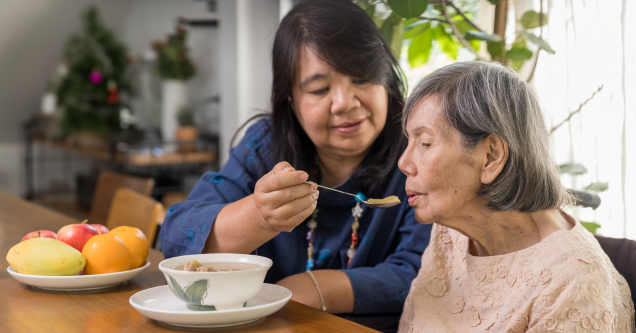
The training program is the first step for those interested in nursing and providing quality care for others. Participants are exposed to health care basics and have a chance to interact with residents at a skilled nursing facility and get hands-on experience. A CNA’s role typically involves assisting patients with activities of daily living, such as basic tasks that include bathing, grooming, toileting, eating, and moving. 

CCA’s NATP is a Registered Apprenticeship Program, which means participants get paid for their training and classroom hours and they earn a nationally recognized apprenticeship credential from the U.S. Department of Labor upon program completion.  

CCA’s CNA Registered Apprenticeship Program is offered through a unique partnership with the CDPH that enables CCA to provide generous support services. The CNA RAP is a short-term program that offers support to CNA trainees in the form of stipends. These support funds may include a child care expense stipend of up to $1,600, a grocery stipend of up to $400, and a transportation stipend of up to $100.

To ensure student success, CCA also offers mentorship from experienced CNAs. Participants are typically paired with a case manager, coach, and mentor who will be there to guide them throughout their training and the initial months as a working CNA. Upon completion of the program and passing the state CNA certification exam, graduates will be promoted to a CNA job with a guaranteed wage increase.

PLEASE NOTE: The CNA RAP training program ended in August 2025, and a different CNA training program was launched. The new program follows a slightly different training model. Please explore CCA’s CNA Training Pathway program for more information: https://advancecaregivers.org/cna-training-pathway-program/

If you have questions about our training programs, you can also email the Education Fund team at: edfund@advancecaregivers.org.

From Caregiver to CNA

Veronica Mendoza’s role as a nurse assistant trainee is new for her, but she is no stranger to the healthcare field. Her journey began nine years ago when she became the caregiver for her aging father. After he passed away, Veronica continued in her role as an In-Home Supportive Services (IHSS) provider for other people who needed care. 

“I felt that I could help others,” she said. 

Training as a CNA Is a Step Toward Career Advancement

Recently, Veronica decided to take another step in her career path when she enrolled in CCA’s Certified Nurse Assistant (CNA) training program. Her goal is to become a CNA and eventually a Licensed Vocational Nurse (LVN). Currently, she’s a nurse aide at Paramount Convalescent Hospital (Sun Mar Healthcare). Once she gets her state CNA certification, she will be promoted to CNA at Paramount Convalescent with a guaranteed wage increase.

The CNA training program is a tuition-free program that is designed to create a pathway for workers in skilled nursing facilities (SNF) who are interested in a nursing career. The program helps to provide a solution to the staffing crisis in the nursing home industry by providing access to free training and placing trained CNAs in skilled nursing facilities who know the facilities’ procedures and practices.

CNA Training Offers Personal and Professional Growth

On a personal level, Veronica said that she is participating in the program “to better myself, to learn more, and to advance in my career.” But the biggest motivation is her passion for helping others. As a CNA at a skilled nursing facility, she will be able to provide direct care to more people.

Veronica first found out about CCA’s CNA training program through her union, the SEIU Local 2015. She encouraged her daughter to enroll as well. They both agree that they have received great support from the Education Fund staff and their instructors throughout the program. “They’re always there to offer support. If I have any questions, I am free to go and ask them anything,” Veronica said.

Mentoring Is a Bonus of This Training Program

The Education Fund’s training program provides tuition and support services to participants. It also supports the skilled nursing facilities where the nursing assistant trainees are getting on-the-job training as nurse aides. A key factor to the participants’ success is the mentoring they receive while they’re in training. Many CNAs continue those mentoring relationships for their first months as CNAs after they pass their state CNA exam. 

“To me, the training is motivating me to continue my healthcare career, and I would say it is 100% worth it,” she said. 

* CNA training programs through CCA and its partners are subject to eligibility requirements.
Please contact our programs team to learn more at: edfund@advancecaregivers.org

This field is for validation purposes and should be left unchanged.

Sign-up to be added to our mailing list!

By providing your email and phone number, you agree to receive emails and text messages from CCA. Message and data rates may apply. Message frequency varies.